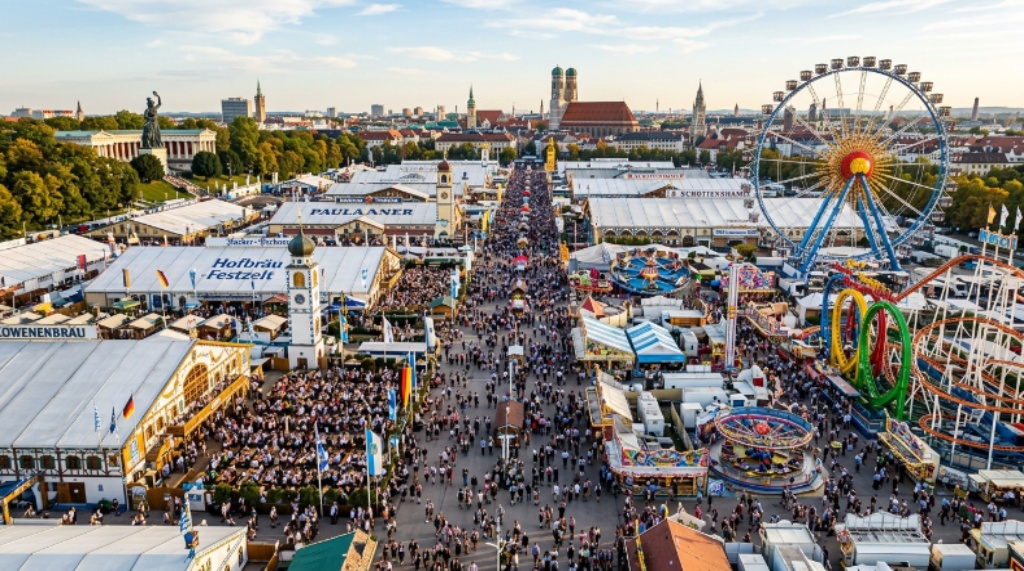
Every autumn, millions of travelers ask the same burning question: when exactly does Oktoberfest happen? If you are planning a trip to Munich this year, the answer will make your calendar very happy. The 191st Oktoberfest Munich 2026 officially runs from Saturday, September 19 to Sunday, October 4, 2026, spanning a full 16 days of Bavarian celebration. According to the official City of Munich website, this iconic festival draws over six million visitors each year, making it the largest public festival on the planet. Whether you are a first-timer or a seasoned Wiesn veteran, this complete guide gives you every detail you need to plan a perfect visit.
What is Oktoberfest and Why Does It Matter?
Before diving into the logistics, it helps to understand what makes Oktoberfest in Munich so incredibly special. Many cities around the world host their own versions of the festival, yet nothing compares to the original. The Munich beer festival is a deeply rooted cultural event that combines Bavarian heritage, world-class beer, traditional music, and a genuinely joyful atmosphere that is hard to replicate anywhere else.
The festival originally started on October 12, 1810, as a public horse race organized to celebrate the royal wedding of Crown Prince Ludwig of Bavaria and Princess Therese of Saxe-Hildburghausen. Citizens of Munich were invited to join the festivities, and the tradition grew from there. Over the following decades, the dates gradually shifted to September to take advantage of warmer weather, though the name “Oktoberfest” stuck because of its historical roots.
Today, the Munich Wiesn (as locals lovingly call it) is so much more than a beer festival. It is a living cultural showcase of Bavarian identity, filled with traditional costumes, folk music, elaborate parades, carnival rides, and hearty food that tells the story of southern Germany in every bite. Furthermore, in 2023, attendance reached a record-breaking 7.2 million visitors who consumed approximately 7.4 million litres of beer, according to Wikipedia’s Oktoberfest entry.
Oktoberfest Munich 2026: Official Dates and Duration
The question everyone wants answered first is simple: when is Oktoberfest 2026? Here are the confirmed details straight from the official source.
Official Oktoberfest 2026 Dates:
- Opening Day: Saturday, September 19, 2026
- Closing Day: Sunday, October 4, 2026
- Total Duration: 16 days
The festival always begins on the first Saturday after September 15 and concludes on the first Sunday of October. For 2026, no extension is necessary, so it runs a clean, 16-day stretch. Beer service officially begins at noon on the opening day and continues until 10:30 PM in the large tents and 11:00 PM in the smaller ones, with all tents closing by 11:30 PM nightly.
Interestingly, the festival runs mostly through September, yet it carries the name “Oktoberfest” because the original 1810 celebration took place in October. The dates shifted earlier over the centuries specifically because Munich’s September weather is reliably warmer and more enjoyable for outdoor festivities. The name simply stayed because of its historic significance and global brand recognition.
Where is Oktoberfest 2026 Held? The Location Explained
Knowing the dates is only half the picture. You also need to know exactly where to go once you land in Munich.
Theresienwiese: The Festival Grounds
The Oktoberfest 2026 location is the Theresienwiese, a sprawling fairground in the heart of Munich, Bavaria, Germany. Locals often simply call it “the Wiesn,” which is the Bavarian word for meadow. The grounds cover approximately 42 hectares and sit just a 10-minute walk south of Munich’s central train station (Hauptbahnhof).
The Theresienwiese gets its name from Princess Therese herself, the bride at whose wedding the very first Oktoberfest was held. So the location carries symbolic meaning that dates back over 200 years. Today, those same grounds host 17 large festival tents, 21 smaller tents, dozens of food stalls, carnival rides, and an enormous open-air fairground that becomes a city within a city for 16 days every year.
How to Get to the Theresienwiese
Getting to the festival grounds is straightforward, and public transport is your best friend during Oktoberfest. Here are the main options:
- U-Bahn (Subway): Take the U4 or U5 line directly to the Theresienwiese station. This is the fastest and most convenient option.
- S-Bahn (City Rail): Take any S-Bahn line to Munich Hauptbahnhof, then walk 10 to 12 minutes south to the grounds.
- Tram: Line 18 or 19 stops near the festival entrance.
- On foot: If you are staying in central Munich, walking to the Wiesn is entirely feasible and a great way to soak in the atmosphere.
- Bicycle: Munich has excellent cycling infrastructure, and many locals ride to the festival. Secure bike parking is available near the grounds.
Driving is strongly discouraged during Oktoberfest. Traffic and parking near the Theresienwiese become extremely difficult, and public transport handles the crowds far more efficiently.
The Opening Ceremony: How Oktoberfest 2026 Begins
The opening ceremony on September 19, 2026 is one of the most electrifying moments in German cultural life. If you have any opportunity to witness it, do not miss it.
The Grand Entry Parade (Einzug der Festwirte)
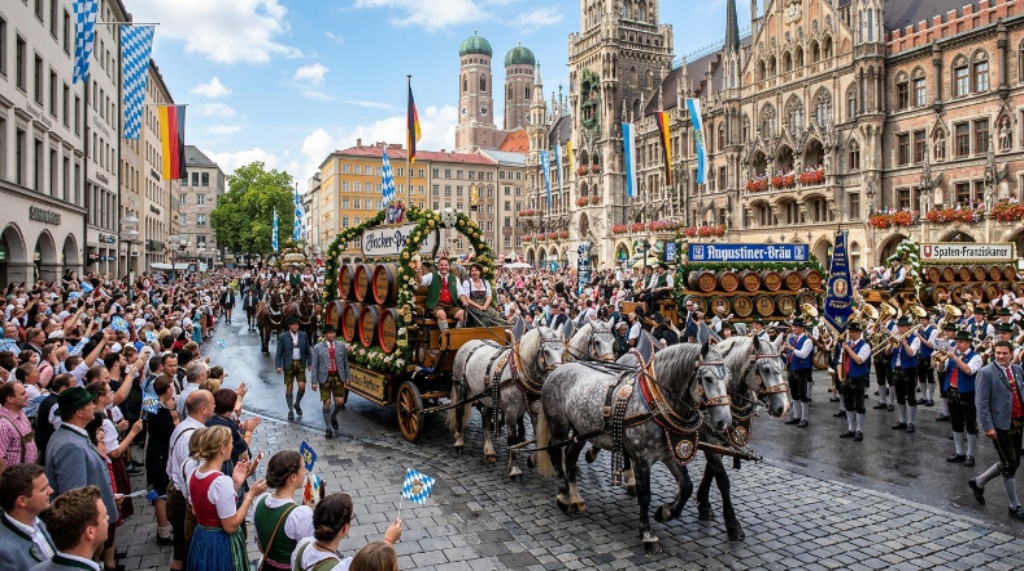
At 10:45 AM on the first day, the Grand Entry of the Oktoberfest Landlords and Breweries begins. Horse-drawn beer carriages decorated with flowers and flags, brass bands in full Bavarian regalia, and tent owners in traditional costumes parade from Josephspitalstraße through Munich’s city center and on to the festival grounds. The procession is visually stunning and captures the full spirit of Bavarian pageantry.
The Ceremonial Tapping (O’zapft is!)
At exactly noon on September 19, 2026, Munich’s Lord Mayor steps into the Festhalle Schottenhamel, the official opening tent, and taps the first keg of the festival. Tradition holds that it takes only two or three strikes of the mallet to open the barrel. Once it flows, the Mayor raises the first Maßkrug (one-litre stein) and shouts “O’zapft is!” meaning “It’s tapped!” in Bavarian dialect. Only after this moment does beer service officially begin in all 14 large tents across the grounds. The ceremony is broadcast on large screens throughout the festival so that everyone can share the moment simultaneously.
The Costume and Riflemen’s Parade (September 20)
The following day, Sunday, September 20, brings the Traditional Costume and Riflemen’s Parade. Around 9,000 participants dressed in authentic regional costumes from Bavaria and beyond march through Munich. This parade is arguably the busiest single day of the festival and draws enormous crowds lining the streets. Consequently, if you plan to attend on this day, arrive very early to secure a good viewing spot.
The Closing Ceremony (October 4)
The festival concludes on October 4, 2026, with a gun salute at noon beneath the iconic Bavaria statue. Beer service ends at 10:30 PM, and the final closure of all tents happens at 11:30 PM. The closing is bittersweet for regular attendees, who count the months until the next year’s edition.
The Beer Tents: Heart of the Oktoberfest Experience
No festival guide would be complete without a thorough look at the famous tents. The beer tents are the beating heart of Oktoberfest, and each one offers a distinct personality, atmosphere, and crowd.
According to the official City of Munich portal, Oktoberfest 2026 features 17 large tents and 21 smaller specialty tents, totaling 38 venues spread across the Theresienwiese. Every drop of beer served inside these tents must be brewed within Munich city limits, a strict rule that ensures quality and authenticity.
The Most Famous Large Tents
Hofbräu-Festzelt: This is arguably the world’s most recognizable Oktoberfest tent. It is always packed with international visitors and carries an electric, high-energy atmosphere. Expect standing on the benches, international sing-alongs, and a particularly lively crowd.
Schottenhamel: As the official opening tent where the Lord Mayor taps the first keg each year, Schottenhamel holds a special place in Oktoberfest history. It tends to attract a younger Munich crowd and gets extremely busy on opening day.
Augustiner-Festhalle: This tent is a firm favorite among Munich locals. Augustiner is considered by many to be the finest traditional Bavarian brewery, and the tent’s atmosphere reflects that. The beer is served from wooden barrels rather than stainless steel kegs, which is a rarity that purists truly appreciate.
Hacker-Festzelt: Known as the “Heaven of Bavaria,” this tent features a stunning painted ceiling decorated with clouds, blue sky, and Bavarian scenery. The visual effect is breathtaking, and the tent consistently delivers a warm, welcoming atmosphere for all types of visitors.
Löwenbräu-Festzelt: Identifiable from a distance by the roaring mechanical lion sculpture at the entrance, the Löwenbräu tent is lively, spacious, and a perennial favorite with both locals and tourists. Every few minutes, the lion roars and raises its beer stein, which never fails to get the crowd cheering.
Winzerer Fähndl: One of the largest tents at the festival, this venue is popular for its sprawling beer garden and friendly, relaxed atmosphere that works well for groups of mixed ages.
Smaller and Specialty Tents
Beyond the massive tents, the smaller venues offer equally memorable experiences. The Kufflers Weinzelt focuses on wine rather than beer, making it a great choice for non-beer drinkers who still want to enjoy the festival atmosphere. The Käfer Wiesn-Schänke is famous for its upscale food and attracts a more sophisticated crowd. Additionally, the Schützen-Festzelt provides a classic Bavarian experience with strong traditional character.
Oktoberfest 2026 Beer Prices and Costs
One of the most practical questions any visitor asks is: how much does it actually cost to attend Oktoberfest? The good news is that entry to the Theresienwiese is completely free. You can walk onto the festival grounds, wander the fairground, watch the parades, and enjoy the outdoor atmosphere without spending a single euro on admission.
However, once you are inside the tents or at the food stalls, costs add up quickly. Here is a realistic breakdown based on recent pricing, with 2026 prices expected to reflect a 3 to 5 percent increase:
- One-litre Maß of beer: approximately €15 to €16 per stein, depending on the tent
- Half a roasted chicken (Hendl): approximately €18 to €25
- Grilled sausages: approximately €11 to €14
- Pretzels (Brezn): approximately €5 to €7
- Non-alcoholic drinks: surprisingly close in price to beer, often €10 or more per litre
- Tent table reservation (minimum spend): approximately €350 to €500 per table of 8 to 10 people
- Individual seat reservation in a large tent: from around €189 per person
As a practical budget guideline, plan to spend between €80 and €150 per person per day for a comfortable experience that includes food, drinks, and entertainment. Official 2026 beer prices will be announced by Munich authorities in June 2026.
How to Get a Table Reservation at Oktoberfest 2026
Securing a reserved table, especially for weekend evenings, is one of the most important steps in planning your Oktoberfest trip. Without a reservation, getting seated inside a popular tent on a busy Saturday night is genuinely difficult.
How the Reservation System Works
Each large tent manages its own reservation process independently. Reservations cover an entire table of 8 to 10 people. Individual seat bookings are rare and usually only available through special quotas. When you reserve a table, you typically pre-purchase vouchers for food and beer rather than paying a flat reservation fee. These vouchers are used once you arrive at the tent.
How to Book
- Check each tent’s official website individually, as reservation systems open at different times, typically between January and May 2026.
- Use the city of Munich’s mandated resale platform, oktoberfest-booking.com, which was introduced in 2023 to combat scalping and ensure verified reservations are only available at face value.
- Book through a licensed tour operator, which is what most international visitors do. Tour packages bundle table reservations with accommodation and sometimes flights, simplifying the entire process considerably.
Reservations for popular tents like Hofbräu and Schottenhamel sell out within hours of opening. Therefore, set a calendar reminder and check official tent websites as soon as January 2026 arrives.
Walk-In Tips
If you do not have a reservation, all is not lost. Every large tent keeps a portion of its seating available on a first-come, first-served basis. On weekday mornings, especially before noon, finding a free seat is quite manageable. By midday on weekends, however, most unreserved spaces fill rapidly. Arriving at 9:00 or 10:00 AM on a weekday gives you the best chance of walking in and finding a great spot.
Traditional Bavarian Food at Oktoberfest
Oktoberfest is a food lover’s paradise that goes far beyond beer. The Bavarian cuisine on offer is hearty, flavourful, and deeply satisfying. Furthermore, the quality of the food at the Munich festival consistently surpasses what you will find at Oktoberfest events in other cities.
Must-Try Oktoberfest Foods
- Hendl (Roasted Chicken): The single most iconic Oktoberfest dish. Golden, crispy, juicy, and served by the half or whole, it pairs perfectly with a cold Maß of beer.
- Schweinshaxe (Pork Knuckle): A slow-roasted pork shank with crackling skin and tender meat. It is a true Bavarian classic that fills you up completely.
- Weißwurst (White Sausage): A delicate Bavarian veal and pork sausage traditionally served with sweet mustard and a soft pretzel. Locals eat it before noon as a breakfast dish.
- Brezn (Pretzel): The enormous, doughy, salt-crusted pretzels sold throughout the festival are hard to resist and make a great snack between steins.
- Käsespätzle (Cheese Noodles): A comforting dish of soft egg noodles smothered in melted cheese and topped with crispy fried onions. Think of it as Bavarian mac and cheese.
- Obatzda: A creamy, paprika-spiced cheese spread served with bread or pretzels. It is a traditional Bavarian appetizer that many visitors discover for the first time at Oktoberfest and love immediately.
- Steckerlfisch (Grilled Fish on a Stick): Whole fish seasoned and grilled over an open flame, served outdoors at festival stalls. It provides a lighter alternative to the heavier meat dishes.
What to Wear: Traditional Oktoberfest Attire
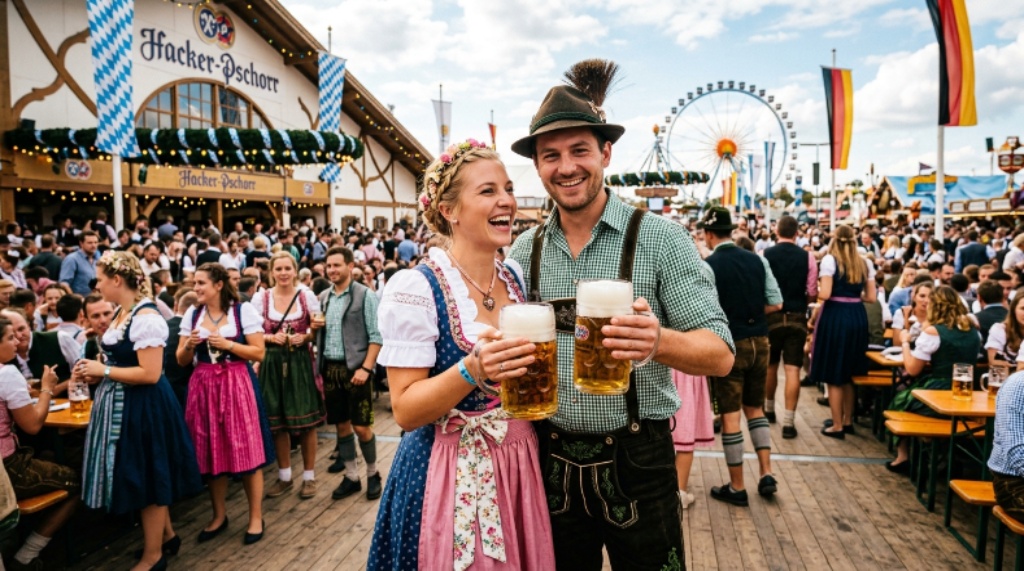
Visitors to Oktoberfest Munich quickly notice that the dress code is unlike any other festival in the world. The vast majority of attendees, locals and tourists alike, wear traditional Bavarian clothing. While it is not legally required, wearing regular street clothes will leave you feeling decidedly out of place.
For Men: Lederhosen
Traditional leather shorts (Lederhosen) paired with a checkered or white shirt, sturdy boots, and knee-high woolen socks are the standard male outfit. Lederhosen range from simple tourist versions to authentic, hand-crafted garments that last decades. If you are buying a pair, genuine leather Lederhosen fit more comfortably and look far more authentic than synthetic alternatives.
For Women: Dirndl
The Dirndl is a traditional Bavarian dress consisting of a bodice, blouse, skirt, and apron. Dirndls come in countless colours and styles ranging from simple cotton designs to elaborate silk versions. One fun Oktoberfest tradition holds that the bow of the apron communicates relationship status. A bow tied on the left indicates that the wearer is single. A bow tied on the right signals that she is taken.
Where to Buy Traditional Attire
You can purchase Tracht (traditional clothing) from specialist stores in Munich’s city center before heading to the festival. Rental shops near the Theresienwiese also offer Dirndl and Lederhosen for short-term hire. Additionally, many online Tracht retailers ship internationally, so you can arrive at the festival already dressed and ready.
Practical Travel Tips for Oktoberfest 2026
Planning your trip goes beyond knowing the dates. Here are the most important practical tips to help your Oktoberfest experience go smoothly.
Book Accommodation Early
Munich’s hotels fill up months in advance for Oktoberfest. Properties close to the city center command premium prices, often two to three times their normal rate. Book as early as possible, ideally by January or February 2026 at the latest. Consider staying slightly outside the city center and using Munich’s excellent public transport to commute to the festival. Surrounding towns like Augsburg and Freising are reachable by S-Bahn and offer far more affordable accommodation options.
Carry Cash
Despite Munich being a modern European city, many vendors, beer tents, and food stalls at Oktoberfest operate on a cash-only basis or have limited card payment options. Carry sufficient cash in euros and use ATMs before entering the festival grounds, as queues at ATMs inside the venue get very long.
Understand the Age Rules
In Germany, the legal drinking age is 16 for beer and wine and 18 for spirits. ID checks are enforced at the festival, particularly inside the tents. Bring your passport or national ID card. Children and families are welcome at the festival, especially during daytime hours, and there are dedicated family areas with rides and attractions suitable for all ages.
Stay Safe and Look After Your Belongings
Oktoberfest is generally a safe and well-policed event. Nevertheless, with millions of visitors, pickpocketing does occur. Keep your valuables secure, use a money belt if possible, and never leave drinks unattended. The festival employs a large medical team and lost-and-found services are available on site. Furthermore, drink responsibly. The strong Oktoberfest beer (typically 5.8 to 6.3% ABV) is potent, and the festival’s medical stations handle a significant number of overconsumption cases each year.
Visit on Weekdays for a Calmer Experience
Weekends at Oktoberfest are thrillingly busy but also significantly more crowded and expensive. Visiting on a Tuesday or Wednesday afternoon gives you a much calmer, more relaxed experience. You will find it easier to get a seat, enjoy conversations with fellow visitors, and appreciate the traditional music without fighting through enormous crowds.
Beyond Beer: Other Things to Do at Oktoberfest 2026
While the beer tents rightly steal most of the attention, the Theresienwiese transforms into a full-scale amusement park during Oktoberfest. There is genuinely something for everyone, regardless of whether beer is your focus.
The festival grounds include classic carnival rides, including roller coasters, spinning rides, and sky-high observation wheels that offer spectacular views over Munich. Traditional carnival games line the pathways, and you can win prizes at dozens of stalls. Haunted houses, shooting galleries, and live performers add to the festive atmosphere throughout the grounds.
The outdoor areas between tents are equally lively, with live music drifting out of every tent, the smell of roasting meat filling the air, and the continuous sound of thousands of people sharing genuinely good times together. Even non-drinkers consistently describe Oktoberfest as one of the most joyful, energizing events they have ever attended.
Conclusion
Oktoberfest Munich 2026 is a once-in-a-lifetime experience that becomes even better with solid preparation. The festival runs officially from September 19 to October 4, 2026, at the Theresienwiese in Munich, Bavaria. This 191st edition of the world’s greatest folk festival promises everything that makes the original Wiesn so legendary: magnificent beer tents, traditional Bavarian food, colourful parades, and an atmosphere of pure communal joy that no other event in the world quite matches.
Start planning now. Book your accommodation early, secure a table reservation as soon as the tent portals open, pack your Lederhosen or Dirndl, and get ready to raise a Maß in one of the most extraordinary celebrations on earth. Prost!
Frequently Asked Questions
What are the official dates for Oktoberfest Munich 2026?
Oktoberfest Munich 2026 runs from Saturday, September 19, 2026 to Sunday, October 4, 2026. The festival spans exactly 16 days and takes place annually at the Theresienwiese in Munich, Bavaria. The opening keg is tapped by the Lord Mayor at noon on September 19 inside the Schottenhamel tent, officially starting beer service across all tents.
Is entry to Oktoberfest 2026 free?
Yes, entry to the Oktoberfest grounds is completely free. You can walk onto the Theresienwiese, enjoy the outdoor areas, watch the parades, and ride the carnival attractions without paying any admission fee. Costs arise when you purchase food, drinks, or merchandise, and table reservations inside the large tents require pre-purchased food and drink vouchers.
Do I need a reservation to attend Oktoberfest 2026?
A reservation is not mandatory, but it is strongly recommended for weekend visits and evening sessions. Walk-in seating is available on a first-come, first-served basis, and weekday mornings offer the best chance of finding unreserved seats inside the tents. For popular tents on weekend evenings, however, arriving without a reservation makes it very difficult to get a seat inside.
What should I wear to Oktoberfest Munich 2026?
Traditional Bavarian clothing is the unofficial but widely observed dress code. Men typically wear Lederhosen (leather shorts) with a checkered shirt and sturdy boots. Women wear Dirndl dresses with a blouse and apron. While regular clothing is technically permitted, wearing Tracht shows respect for Bavarian culture and significantly enhances the overall experience of the festival.
How much does Oktoberfest 2026 cost per person per day?
Budget approximately €80 to €150 per person per day for a comfortable experience including food, drinks, and entertainment. A one-litre Maß of beer costs around €15 to €16. Half a roasted chicken costs approximately €18 to €25. Entry to the grounds is free, and table reservations in large tents typically require a minimum pre-spend of €350 to €500 per full table of 8 to 10 people.
Discover the location on Google Maps: