There is one fall event in the Pacific that food lovers simply cannot afford to miss. Every October and November, the islands of Hawaii transform into one of the world’s most extraordinary culinary stages. World-class chefs, celebrated winemakers, master mixologists, and local farmers come together for a celebration unlike anything else on the food calendar. Now in its sixteenth year, this is the festival that defines Hawaii as a premier dining destination.
Whether you are planning a trip around it or are already on the islands, this guide covers everything you need to know — dates, islands, events, ticket information, featured chefs, and practical tips for making the most of every bite.
What Is the Hawaii Food and Wine Festival?
The Hawaii Food and Wine Festival is the largest and most celebrated culinary event in the state of Hawaii. It is organized by the Hawaii Ag and Culinary Alliance, a nonprofit dedicated to supporting local agriculture, culinary education, and sustainability across the islands.
The festival spans Hawaii Island, Maui, and Oahu, bringing together chefs, mixologists, sommeliers, and winemakers from Hawaii and around the country for a variety of events aimed at supporting Hawaii’s local agriculture and culinary industries and positioning Hawaii as a world-class culinary destination.
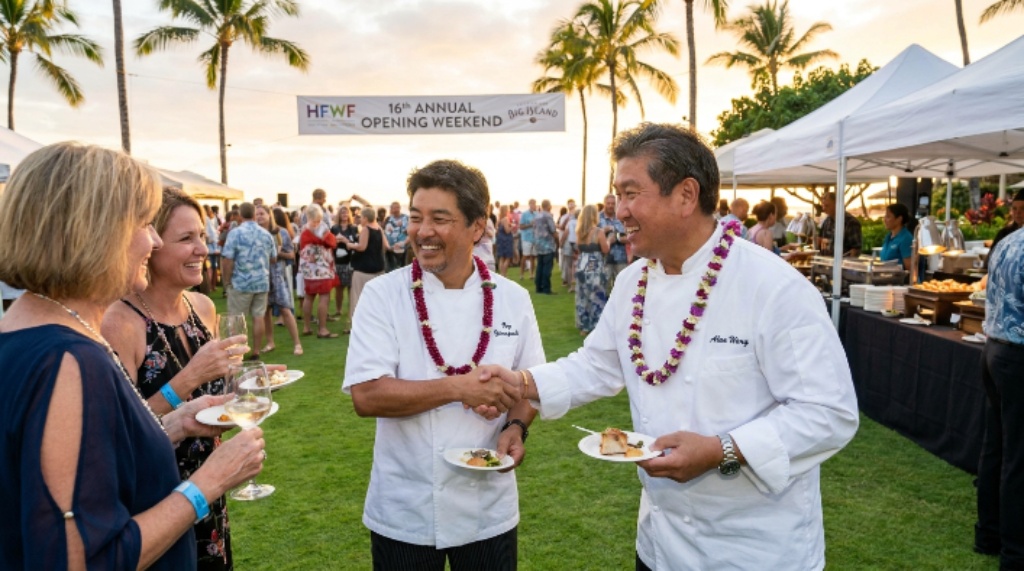
Co-founded by James Beard Award-winning chefs Roy Yamaguchi and Alan Wong, two of the founders of Hawaii Regional Cuisine, the festival has grown into a statewide platform that advances agriculture, education, sustainability, and workforce development while elevating food as a defining part of the visitor experience.
Additionally, the festival has a strong giving dimension. Proceeds help to fund culinary scholarships, agricultural education, sustainability initiatives, workforce development programs, and the hospitality industry. Since its inception in 2011, the Hawaii Ag and Culinary Alliance has raised $5.2 million.
2026 Dates: Three Islands, Three Weekends
One of the most distinctive features of the festival is its multi-island structure. Rather than concentrating everything in one location, the event travels across the state, giving each island its own dedicated weekend of experiences.
The Island of Hawaii, known as the Big Island, opens the festival on the weekend of October 16 to 17. Kaanapali on Maui takes the middle weekend from October 23 to 25. Oahu closes it out over the weekend of November 5 to 8.
Therefore, if you are planning to attend events on multiple islands, you will need to structure your trip around this three-weekend schedule. Each island weekend stands independently, so attending all three requires careful travel planning across nearly a month.
The hashtag to follow on social media is #HFWF26, which the festival uses across all its official channels for real-time updates, chef announcements, and ticket alerts.
Big Island Weekend: October 16 to 17
The festival begins on Hawaii Island, and this opening weekend sets the tone for everything that follows. Events are held in resort areas along the spectacular Kohala Coast.
The Big Island portion of the festival includes a series of ticketed experiences that may feature grand tastings, wine seminars, chef-driven dinners, and specialty culinary events. The festival highlights locally sourced ingredients and brings together farmers, ranchers, fishermen, and culinary leaders to celebrate Hawaii’s diverse food culture.
The Kohala Coast is home to some of Hawaii’s finest luxury resorts, and the festival uses these stunning venues to full effect. Expect ocean views, warm evening air, and a menu of ingredients pulled straight from the island’s volcanic soil. The Big Island is known for its coffee, macadamia nuts, tropical fruits, and world-class cattle ranching, all of which feature prominently in the weekend’s events.
Maui Weekend: October 23 to 25
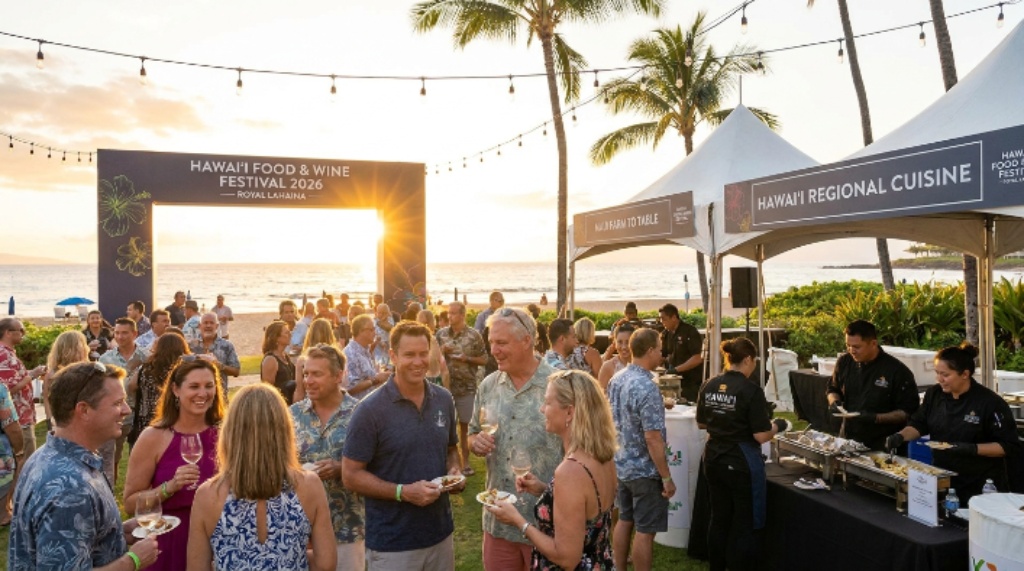
The festival moves to Maui for its middle weekend, with events centered in Kaanapali along the island’s iconic west coast. This is perhaps the most picturesque setting of the entire festival run.
One of the confirmed events is a beachfront afternoon gathering. This event is hosted on the ocean front lawn of Royal Lahaina Resort and Bungalows between the pool and beach, giving it a casual and relaxed atmosphere.
Confirmed chefs for this Maui event include Nyesha Arrington of Native by Nyesha in Los Angeles, Jayson Asuncion of Royal Lahaina Resort and Bungalows, Ravi Kapur of Liholiho Yacht Club, Susar Lee of LEE Restaurant, and Claudette Zepeda of Chispa Hospitality. This kind of lineup, drawing talent from California, Hawaii, and Canada, reflects the festival’s truly national reach.
Additionally, the Maui weekend includes a Sunday morning event. A Sunday event takes place from 11:00 a.m. to 1:00 p.m. on October 25, 2026. This kind of mid-morning format is perfect for guests who want a lighter, more social experience before exploring the rest of what Maui has to offer.
Oahu Weekend: November 5 to 8
The grand finale takes place on Oahu, and it is the biggest and most varied weekend of the three. The Hawaii Food and Wine Festival returns to Oahu for a weekend of culinary events featuring chefs, winemakers, and culinary professionals from Hawaii and around the world.
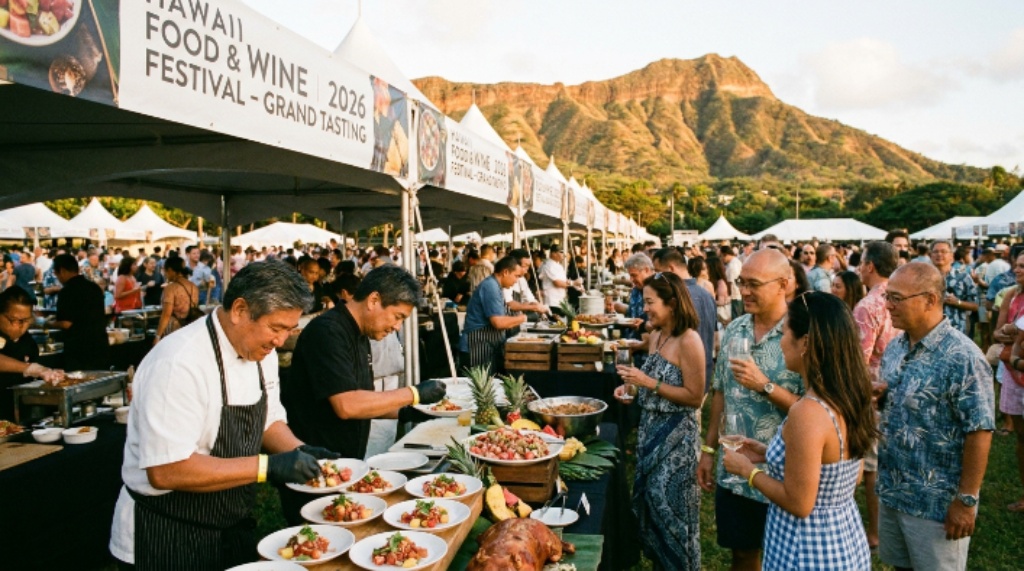
Two events on Oahu deserve particular attention. The first is the grand tasting. The Greatest Hits Presented by Hawaiian Airlines is a grand tasting held at Kapiolani Community College Great Lawn on Saturday, November 7. This is a walk-around event where guests can move freely between stations, sampling dishes from dozens of chefs in one beautiful outdoor setting.
The second is a brunch event the following morning. The Breakfast Club brunch takes place at Hyatt Regency Waikiki Beach Resort and Spa on Sunday, November 8. This more intimate setting provides a relaxed close to the festival weekend.
The Theme for 2026: Traditions and Heritage
Each year, the festival adopts a theme that shapes its programming and the stories told through food. In 2026, that theme is Traditions and Heritage.
The festival’s theme reflects on the cultural roots of Hawaii’s culinary and agricultural communities and celebrates local farmers, ranchers, fishers, and chefs.
This is not simply a marketing phrase. The theme has real implications for what chefs cook and how they talk about their ingredients. Every participating chef is required to incorporate locally grown, raised, or caught ingredients. This rule keeps the festival anchored to the land and sea of Hawaii, even when the talent comes from halfway around the world.
It is a rule that creates genuinely memorable meals. A chef from Washington, D.C. or Metro Manila is forced to engage with ingredients they may never have worked with before. The result is creative, place-specific cooking that you simply cannot experience anywhere else.
Featured Chefs and Culinary Talent
The talent lineup is one of the festival’s greatest strengths. The lineup includes nearly 100 chefs and culinary leaders from across the United States and abroad, including Canada and South Korea, with 18 new chefs and numerous returning participants. Wine professionals, mixologists, culinary innovators, local farmers, ranchers, and fishers are also set to attend. More than 200 culinary tastemakers will participate in events ranging from brunches and a professional development conference to gala dinners, grand tastings, golf experiences, and culinary events.
The 2026 roster includes talent from restaurants and venues across the country and the world. Participating restaurants and institutions include ABACA in San Francisco, Native by Nyesha in Los Angeles, Liholiho Yacht Club, The Katherine Restaurant in Fort Lauderdale, Honey Salt and Crown Block in Las Vegas, Chauhan Ale and Masala House in Nashville, Mokbar in New York, The Local General Store in Honolulu, Hog Island Oyster Co. in San Francisco, Anju in Washington D.C., and Linamnam MNL from Metro Manila in the Philippines.
This geographic diversity is remarkable. It means that the Hawaii Food and Wine Festival is not simply a showcase of local talent. It is a genuinely global event that happens to be rooted in one of the most beautiful places on earth.
The FEAST Conference
Beyond the dinner tables and tasting lawns, the festival hosts a serious professional development event known as FEAST. The acronym stands for Food, Education, Agriculture, Sustainability, and Tourism.
FEAST is a professional development conference that serves as a platform for global thought leadership, consisting of several panel discussions with speakers from all over the country in culinary, hospitality, agriculture, and visitor industries.
This conference is especially relevant for chefs, farmers, food entrepreneurs, and hospitality professionals who want to connect with global industry leaders and engage with ideas shaping the future of food systems. It runs alongside the consumer-facing events, adding an educational layer to the festival’s broader mission.
Types of Events to Expect
The festival is not one thing. It is a collection of very different experiences, each designed for a different kind of appetite and budget.
- Grand walk-around tastings give guests freedom to move between chef stations, sampling small bites and paired drinks at their own pace across a large outdoor space.
- Seated chef dinners are the most immersive and premium option. Multiple courses, wine pairings, and intimate settings with some of the world’s most celebrated culinary talents.
- Brunches offer a relaxed, social atmosphere for guests who want a lighter mid-morning experience.
- Wine and spirit seminars provide deeper learning opportunities, ideal for collectors, sommeliers, and enthusiasts who want to engage directly with producers.
- Golf experiences combine the islands’ legendary courses with culinary activations.
- The FEAST professional conference serves the industry community with panels and networking.
Tickets: How to Buy and What to Expect
All events require tickets, which are sold separately. There is no single pass that covers the entire festival. Instead, each event is ticketed individually, which means you can build a custom experience based on the chefs, formats, and islands that interest you most.
Tickets are available through the festival’s official website. Prices vary widely by event, from walk-around tastings up to high-end dinners, so check the official site for current pricing. As a general guide, walk-around tastings tend to start in the range of $200 and above, while premium seated dinners can reach several hundred dollars per person. Special VIP or covered seating experiences command higher prices still.
However, the value proposition is strong. You are not simply buying a meal. You are buying access to culinary talent that would otherwise require flights to multiple cities, in a setting that no other event in the world can replicate.
Tickets for popular events, particularly the seated dinners, tend to sell out quickly. Therefore, buying early is strongly advised once your preferred events go on sale. Visit hawaiifoodandwinefestival.com directly for the official listings and to purchase.
Supporting Local Agriculture and Education
The festival’s impact extends well beyond the events themselves. The festival contributes over $5 million toward culinary education, sustainability, cultural preservation, and relief efforts for restaurant and hospitality workers during challenging times. The festival drives significant economic impact, with $26.5 million in visitor spending.
Additionally, the festival supports aspiring culinary professionals through scholarship programs. Culinary professionals can elevate their careers with full-tuition scholarships available through the CIP and CIA Workforce Development Scholarship Fund, enabling them to expand their culinary knowledge with intensive courses focusing on locally sourced ingredients.
This is a festival that feeds back into the communities it celebrates. Every ticket purchased is, in a small way, an investment in the future of Hawaiian food culture.
Practical Tips for Attending
Planning ahead makes an enormous difference when it comes to getting the most out of the festival. Here are a few essential tips before you go:
- Book travel and accommodation well in advance, especially for the Oahu weekend, which draws the largest crowds.
- Decide on your island or islands first, then choose events. Trying to cover all three islands in one trip is ambitious and requires significant coordination.
- Check the official website regularly. The full lineup is announced in stages, and new events and chefs are added as the festival approaches.
- Follow the official social media channels using #HFWF26 for real-time updates and last-minute ticket alerts.
- Arrive at events with comfortable footwear, especially for outdoor grand tastings where you will be on your feet for extended periods.
- November weather on Oahu can vary. Bring a light layer for evening events, particularly outdoors.
Conclusion
The Hawaii Food and Wine Festival 2026 offers a once-a-year opportunity to experience the islands through an exceptional culinary journey. Taking place from October 16 to November 8, the 16th annual festival spans three Hawaiian islands. More than 200 culinary tastemakers will participate, including nearly 100 chefs from across the United States and around the world. This year’s festival celebrates the theme “Traditions and Heritage,” with chefs showcasing locally sourced Hawaiian ingredients. Events will take place across the Big Island, Maui, and Oahu. Visitors can enjoy a variety of experiences, from casual beachfront tastings and Sunday brunches to premium multi-course dinners. The festival also features the FEAST professional development conference, offering opportunities to explore the culinary industry beyond the dining table.
Tickets are on sale now through the official website, and popular events fill up fast. Beyond the extraordinary food and drink, the festival supports local agriculture, culinary scholarships, and sustainability programs that benefit Hawaiian communities long after the last plate is cleared. If you love food, love travel, or simply love Hawaii, this is the one event that brings all of that together in a way that nothing else can.
Frequently Asked Questions
When is the Hawaii Food and Wine Festival 2026?
The 2026 festival runs from October 16 to November 8. It is structured around three separate island weekends: the Big Island from October 16 to 17, Maui from October 23 to 25, and Oahu from November 5 to 8.
Where are the events held?
Events take place across three islands. The Big Island events are held in resort areas along the Kohala Coast. Maui events are centered in Kaanapali, primarily at the Royal Lahaina Resort and Bungalows. Oahu events include the grand tasting at Kapiolani Community College Great Lawn and a brunch at Hyatt Regency Waikiki Beach Resort and Spa.
How do I buy tickets?
Tickets are sold individually per event through the official website at hawaiifoodandwinefestival.com. There is no single all-access pass. Prices vary by event type, from walk-around tastings to premium seated dinners. Early purchase is recommended as popular events sell out quickly.
What is the 2026 festival theme?
The 2026 theme is Traditions and Heritage. It reflects on the cultural roots of Hawaii’s culinary and agricultural communities and celebrates local farmers, ranchers, fishers, and chefs. Every participating chef is required to incorporate locally grown, raised, or caught Hawaiian ingredients into their dishes.
Does the festival support any charitable causes?
Yes. The festival is run by the Hawaii Ag and Culinary Alliance, a nonprofit organization. Proceeds support culinary scholarships, agricultural education, sustainability initiatives, workforce development programs, and hospitality industry relief efforts. Since 2011, the Alliance has raised more than $5.2 million for these causes.