
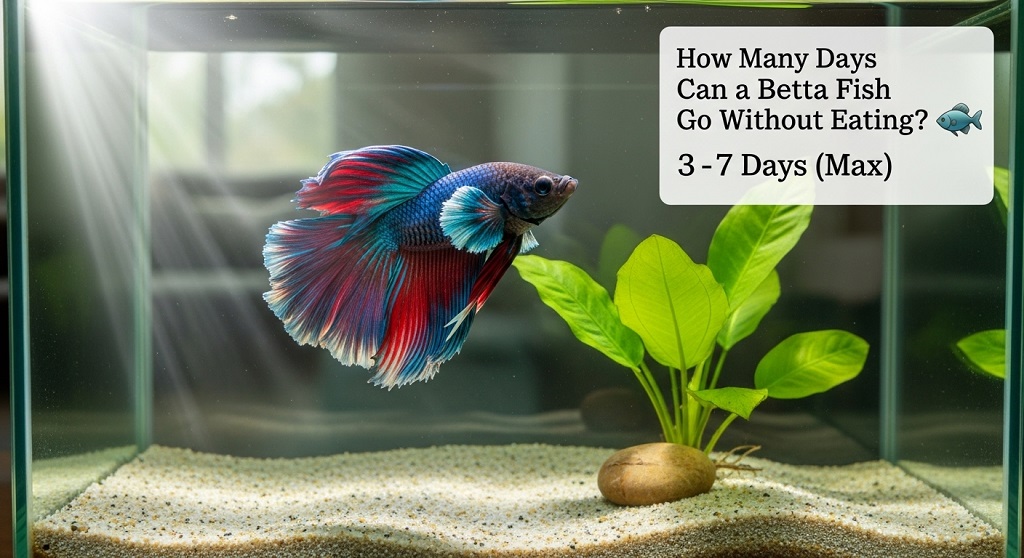
A healthy adult betta fish can usually survive 7 to 14 days without food, but this is not safe or recommended. Most bettas begin to experience stress, weakened immunity, and digestive disruption after just 3–5 days without eating.
Many fish owners worry when they miss a feeding. Maybe you traveled. Maybe your feeding schedule slipped. Or maybe your betta suddenly stopped eating. The concern is valid because bettas are small tropical fish with specific metabolic needs.
The real issue is not survival. It is long-term health. A betta that survives two weeks without food may still suffer organ stress, muscle loss, and increased disease risk afterward.
Understanding how long a betta fish can go without eating helps you prevent starvation, plan vacations safely, and recognize warning signs early.
This guide explains realistic fasting limits, safe feeding gaps, emergency solutions, and what research and aquarium case observations show about betta fish feeding behavior.
How many days can a betta fish safely go without food?
Most healthy betta fish can safely go without food for 3 to 5 days with minimal risk. Beyond this window, health complications become more likely.
Short fasting periods are normal in aquarium care. In fact, experienced keepers sometimes skip one feeding day weekly to support digestion and reduce bloating risk.
However, longer fasting creates measurable stress responses.
- Day 1–2: No major impact
- Day 3–5: Mild energy decline begins
- Day 6–10: Noticeable weakness and slower movement
- Day 10–14: High risk of immune suppression
Unlike community fish that graze constantly, bettas rely on scheduled feeding. They cannot forage efficiently inside small aquariums without live prey sources.
Why can betta fish survive so long without eating?
Betta fish survive fasting periods because their metabolism adapts to irregular food availability in natural habitats.
In Southeast Asian rice paddies and shallow wetlands, bettas experience fluctuating food access. Insects appear seasonally. Water levels change. Competition varies.
This environment shaped their ability to conserve energy during shortages.
Biologically, bettas respond to fasting by:
- Reducing movement
- Slowing digestion
- Using stored body fat
- Lowering metabolic demand
But aquarium bettas differ from wild bettas. They depend entirely on you for nutrition. Long fasting inside tanks creates faster health decline than in natural ecosystems.
What happens inside a betta fish’s body during starvation?
During starvation, a betta fish first burns stored fat, then muscle tissue, and finally begins organ stress.
This progression follows a predictable biological pattern seen across many aquarium fish species.
| Stage | Energy Source Used | Visible Symptoms |
|---|---|---|
| Early fasting | Stored fat | Slight inactivity |
| Extended fasting | Muscle protein | Thin body shape |
| Severe starvation | Organ reserves | Weak swimming |
A 2019 ornamental fish nutrition review in controlled aquaculture environments found that prolonged fasting weakens immune response and increases infection rates in small tropical species.
This explains why bettas that survive long feeding gaps often develop fin rot or lethargy afterward.
Can betta fish survive a weekend without food?
Yes, betta fish can safely go 2–3 days without food during short trips.
This is one of the most common concerns among new aquarium owners.
If your tank conditions are stable and the fish is healthy, a weekend fasting period does not cause harm.
Before leaving:
- Feed a normal portion (not extra)
- Check water temperature
- Ensure filtration is working
- Avoid overfeeding “just in case”
Overfeeding before travel often causes more problems than skipping meals.
Can betta fish survive a week without eating?
Yes, most adult betta fish can survive 7 days without food, but health risks increase after day five.
While survival is possible, extended fasting affects:
- immune strength
- energy levels
- digestive balance
- fin condition
Fish that fast for one week often recover if feeding resumes gradually with high-quality protein sources like betta pellets or frozen bloodworms.
However, repeated weekly starvation cycles should be avoided.
Can betta fish survive two weeks without food?
Some betta fish may survive up to 14 days without food, but this is dangerous and not considered safe.
At this stage, the fish begins using structural protein reserves. Muscle thinning becomes visible near the head and abdomen.
Recovery after two weeks without food is uncertain.
Common long-gap complications include:
- fin deterioration
- slow swimming response
- reduced appetite
- higher infection risk
Emergency feeding support should always be arranged if you expect to be away longer than five days.
Do baby betta fish survive without food as long as adults?
No, baby betta fish can survive only 1–3 days without food.
Juvenile bettas require frequent feeding because their bodies grow rapidly.
They need:
- higher protein intake
- regular energy supply
- consistent feeding intervals
Missing meals during early development can permanently affect growth rate and immune strength.
Fry survival depends heavily on daily feeding routines.
Does tank size affect how long betta fish survive without eating?
Yes, larger and well-maintained tanks help bettas tolerate short fasting periods better.
Tank ecosystems sometimes contain micro-food sources like:
- biofilm
- tiny organisms
- plant microorganisms
These cannot replace regular feeding but may slightly support survival during short absences.
Small bowls without filtration provide no backup nutrition sources.
Can betta fish find food naturally inside aquariums?
Most betta fish cannot find enough natural food inside home aquariums to survive long-term without feeding.
Unlike outdoor ponds, indoor tanks rarely support insect populations.
Even planted aquariums provide only minimal supplemental nutrition.
Betta fish remain dependent on:
- pellets
- live food
- frozen protein sources
- freeze-dried insects
What are signs your betta fish is starving?
A starving betta fish shows weight loss, inactivity, faded color, and reduced fin movement.
Early detection prevents serious health decline.
Watch for these warning signs:
- sunken belly
- visible spine outline
- slow swimming
- resting at tank bottom
- loss of color brightness
If symptoms appear, resume feeding slowly instead of giving large portions immediately.
What is the safest feeding schedule for betta fish?
The safest feeding schedule for betta fish is once or twice daily in small portions.
Consistency matters more than quantity.
A balanced weekly feeding routine looks like this:
- Pellets: daily staple
- Frozen food: 2–3 times weekly
- Live insects: occasional enrichment
- Fasting day: once weekly optional
This structure supports digestion and reduces constipation risk.
How can you feed your betta fish while traveling?
The safest way to feed a betta fish during travel is using a trusted caretaker or automatic feeder.
Vacation feeding blocks often release excess food and damage water quality.
Better alternatives include:
- automatic feeders
- pre-measured feeding containers
- neighbor support
- short-term fasting (under 5 days)
Planning ahead protects both fish health and tank stability.
Is fasting ever beneficial for betta fish?
Yes, short fasting periods can support digestion and prevent bloating in betta fish.
Many experienced aquarists include one fasting day weekly.
This practice helps:
- reset digestion
- reduce constipation
- prevent swim bladder issues
- improve appetite response
However, fasting should never exceed 48 hours unless medically necessary.
Conclusion: How long should you allow a betta fish to go without food?
A betta fish can survive longer than most people expect without eating. But survival is not the same as health. While adults may last up to two weeks without food, the safe limit is closer to three to five days.
Regular feeding protects immunity, color vibrancy, and energy levels. It also prevents hidden stress that weakens fish over time.
If you plan to travel, prepare feeding support in advance. If your betta stops eating, investigate quickly. And if you want your fish to live longer, consistency matters more than portion size.
Healthy feeding routines create healthier bettas.
Start improving your betta care today by reviewing your feeding schedule and adjusting portions for long-term health and stability.
Frequently Asked Questions (FAQs)
How long can a betta fish go without food before dying?
A betta fish may survive up to 14 days without food, but health complications usually begin after 5–7 days. Safe fasting should stay under five days.
Can I leave my betta fish alone for 3 days?
Yes. Most healthy adult bettas tolerate a 3-day fasting period without health risks if tank conditions remain stable.
Should I feed extra before leaving my betta fish?
No. Overfeeding before travel increases ammonia buildup and digestive stress. Feed normal portions instead.
Do betta fish stop eating when stressed?
Yes. Stress from poor water quality, temperature changes, or illness commonly reduces appetite in bettas.
Can betta fish survive on plant matter alone?
No. Bettas are carnivorous fish and require protein-rich foods like insects, larvae, and pellets.
How often should betta fish eat each day?
Most bettas do best with one or two small meals daily depending on age and activity level.
Is one fasting day per week safe for betta fish?
Yes. A weekly fasting day can support digestion and reduce bloating risk in healthy adult bettas.
Related Topics: How to Ferment Vegetables at Home Safely (Step‑by‑Step)
What Next: How to Choose the Right Ravioli Cutter for Your Kitchen